




The playing card is still one of the most common forms of fun in the world. Every pack from traditional games and casino decks to collectible trading cards and promotional sets is made in specific dimensions that support its use and packaging. Therefore, a good understanding of playing card dimensions is very important for manufacturers, as well as retailers and brands that want to design packaging that will protect the cards and at the same time boost their general presentation.
Why Playing Card Dimensions Matter
The size of a playing card is more than a mere measurement. It’s about how comfortably the cards fit in the hands of the players, how easy they are to shuffle, and how snugly they go into their packaging. A box that’s just the right size keeps the cards from shifting around in transit, so there’s less chance of bent corners, scratches, or dinged-up edges by the time they arrive. Custom playing card boxes sized to match the deck exactly also make for a polished presentation and enhance the overall customer experience.
A Brief History of Playing Cards
Playing cards surfaced hundreds of years past and evolved to be one among the most popular gaming tools worldwide. Over the years, different card styles were introduced by manufacturers for poker, bridge, tarot, educational games, collectible card games, and games for children’s entertainment. In today’s world, custom playing cards are also widely used in promotional campaigns, corporate branding, and as personalized gifts.
Standard Playing Card Size
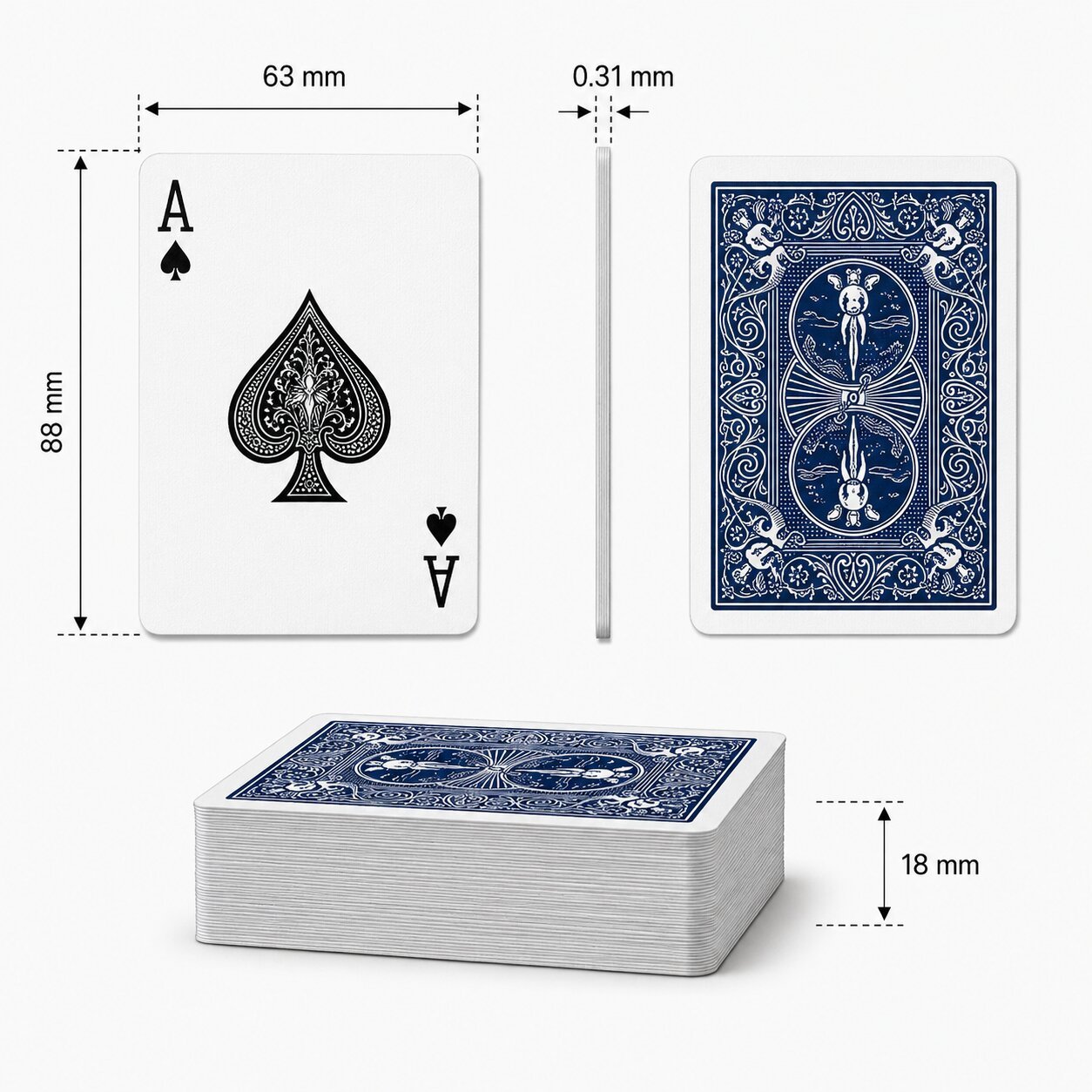
The standard size of a playing card is approximately 2.5 × 3.5 inches (63.5 × 88.9 mm). This size is standard, as it allows for both easy handling and clear printing. The majority of casino cards, poker decks, trading cards, and collectible games are produced in these dimensions so that they can fit into standard storage boxes and accessories.
Different Types of Playing Cards
Not every playing card shares the same dimensions. Poker cards are slightly wider than bridge cards. Tarot and oracle cards are much larger to leave extra space for detailed illustrations. Trading card games mostly apply the standard poker dimensions, whereas mini card decks come in travel and storage compact sizes. Each card type needs packaging that matches its exact measurements for maximum protection.
Poker Card Dimensions
Poker cards rank as some of the most familiar playthings globally. Their standard size makes it easy to shuffle, deal, and handle during gameplay. These cards find use in casinos, home games, tournaments, and promotional products. Custom poker card packaging should be designed to snugly fit the whole deck without extra, unnecessary space.
Bridge Card Dimensions
Bridge cards are a bit less wide than poker cards, making it more comfortable to hold when players are managing a larger number of cards in their hands. The difference is small, but it necessitates packaging specifically designed to fit the unique measurements of bridge cards.
Tarot and Oracle Card Sizes
This is because the illustrations are big and detailed. Most tarot and oracle cards are much larger than a standard playing card. There is some variance in size from one publisher to another, so most manufacturers opt for a custom package that will handle a range of card sizes while protecting the corners and printed surfaces.
Mini Playing Cards
Mini playing cards have seen a rise in demand for use in compact games for travel, as giveaways for promotions, and as novelties. Their small size makes for easy portability, and special packaging helps reduce any chances of damage during movement. Many brands also place the decks in 3.5 Mylar bags first before putting them inside the retail packaging to keep them safe from moisture, dust, and other elements until they reach the consumer.
Playing Card Thickness
Card thickness is very important when it comes to durability and handling. High-quality playing cards are made with thicker cardstock that does not bend and gives a better feel during gameplay. Thus, the overall thickness of the deck should always be considered when designing custom boxes so that the cards fit securely but without putting too much pressure.
Materials Used for Playing Cards
Nowadays, playing cards are made from high-quality paper board, plastic-coated card stock, or entirely plastic materials. Paper cards have excellent print quality and are generally used for everyday games. Plastic cards are more durable and resistant to water. The choice of material impacts the playing experience and the cards’ longevity.
Popular Card Finishes
Surface finishes are of dual benefit, aesthetic as well as performance. Matte finish results in smooth, elegant textural feel with minimum reflection and glare; gloss finish increases color vibrancy and sharpness of images. Linen finish texturing offers slight strain improvement in gripping and shuffling therefore mostly applied on professional gaming cards.
Choosing the Right Playing Card Box
It should be designed based on the exact dimensions of the cards inside. To facilitate good storage and handling as well as protect against dust, moisture, and physical damage, a well-designed box should have just enough space to accommodate the cards it contains without allowing unnecessary movement. Most businesses, for bulk deliveries over long distances, also use sturdy sport boxes as an external shipping solution to keep playing card products secure.
Benefits of Custom Playing Card Packaging
Custom packaging is one way of product differentiation in a crowded marketplace. Personalized designs, premium printing, and specialty finishes not only create a memorable first impression but also protect the cards through the entire supply chain. Attractive packaging also enhances the perceived value and strengthens brand recognition among customers.
Design Options for Playing Card Boxes
Customization of playing card boxes can be done through different printing techniques and finishing options to suit the brand identity. Common enhancements include foil stamping, embossing, debossing, spot UV, soft-touch lamination, and custom artwork. All these features make the packaging look premium and attractive on retail shelves.
Measuring Cards for Custom Packaging
Measure the width, height, and thickness of the complete card deck before manufacturing custom packaging. Accurate sizings promise a snug fit, reduce damage during shipment, and enhance the look of the product. Proper sizing also helps to keep unnecessary packaging material out of the way and maintain efficient production.
Conclusion
Knowing playing card dimensions is the first step toward creating great packaging, which offers both protection and aesthetic appeal. Whether you make poker cards, tarot decks, bridge cards, trading cards, or promotional games, choosing the right dimensions will ensure a proper fit and, most importantly, a secure fit for the safety of your product and the satisfaction of your customers. We at Sharp Custom Boxes design premium custom playing card boxes exactly how you want them to keep your playing card products safe and leave an unforgettable mark on customers. Get in touch with us today to talk about your packaging needs and get a free quote. Read more: Buy Cosmetic Boxes